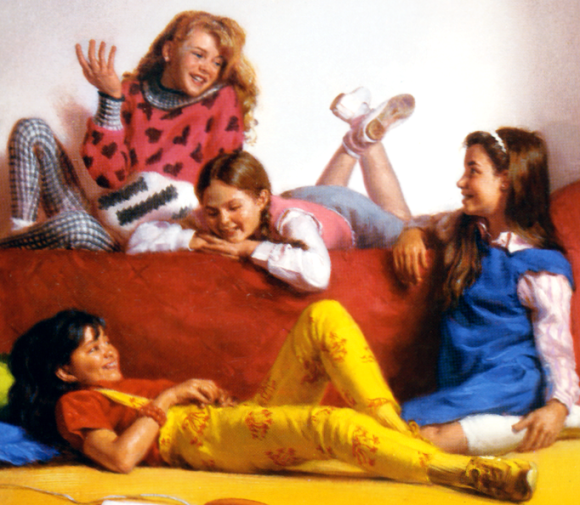
Original cover art from Book #1: Kristy’s Great Idea
At the beginning of Coronatide (that’s what I call this time in our lives), I found the Baby-Sitters Club series on my digital library app and thought it would be fun to revisit my childhood friends, the members of the BSC. As I read, I’d call my friends and go on long diatribes about the books, the things I forgot, the things I’d never noticed, and the things that didn’t age so well, and friend suggested I start a blog (probably so she wouldn’t have to listen to me). Of course, I only actually made it through about five entries before I lost all motivation for things not imperative to daily life (because, again, Coronatide. You know what I’m saying). I’ve still been reading the books, though. I started with the Super Specials because they were always my favorites and I read them all in order. Then I began on the regular books of the series and I’ve read books 1-53, in order. Although I hope to continue blogging my way through the books in the future, I wanted to write down some thoughts on this process before the new Netflix Baby-Sitters Club series goes live on Friday.
When I read the Baby-Sitters Club books 20+ years ago, I didn’t understand how groundbreaking they were. They certainly reflected more diversity than I experienced in the small towns I grew up in, where almost no one I interacted with on a daily basis was anything but white and Christian. Very few of my close friends were children of divorced parents or dealt with significant health issues. When I opened a BSC book, though, my world also opened up. Claudia became my first Asian friend, and Jessi became my first Black friend (because they definitely felt like real-life friends). In Happy Holidays, Jessi, I learned about Kwanzaa. In Kristy and the Secret of Susan, I was introduced to autism, a solid decade before I heard anyone else talk about it, even if the book’s portrayal of it is a bit cringe-worthy by current standards. In Aloha, Baby-Sitters, I grappled with the legacy of racism surrounding Asian-Americans in the aftermath of World War II alongside Claudia when members of the BSC visited Pearl Harbor on a school trip. The list could go on, but here’s the thing: it wasn’t until adulthood that I realized the real impact of this series.
This week, a whole new generation will be introduced to the BSC when the Netflix series premieres. I’ve already seen some buzz about casting choices (casting young women of color in roles depicted as white in the book, including Mary Anne and Kristy). And there will certainly be deviations from the books in terms of plotlines (in the series, set in the present day, Claudia’s landline phone comes from Etsy). It won’t be the Baby-Sitters Club I grew up with but, not only is that okay, that’s a good thing. The legacy of Ann M. Martin’s Baby-Sitters Club universe isn’t plotlines in children’s novels of the late 20th Century; the legacy of this beloved literary universe is one of inclusion, acceptance, and diversity. I look forward to seeing how Netflix brings this legacy and this world to life on screen, transforming and inspiring a new generation.

 Say Hello to Your Friends